How to Buy Industrial Machinery Straight from Japan: Complete 2026 Guide
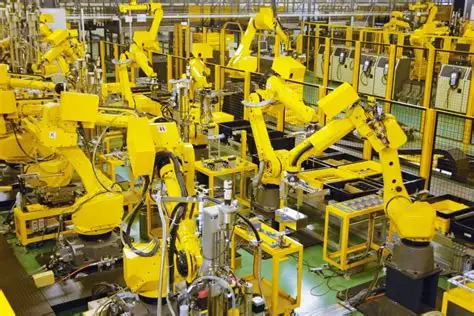
Japan is one of the world's leading exporters of high-quality used industrial machinery — from excavators and forklifts to CNC machine tools, generators, and agricultural equipment. If you know how the process works, buying directly from Japan can save you 30–60% compared to local market prices. This guide walks you through every step, from choosing the right machinery to clearing it through customs in your country.
https://japancarnet.com/browse-machinery/
https://japancarnet.com/listings/request/
Why Buy Industrial Machinery from Japan?
Japan has built one of the most disciplined maintenance cultures in the world. Machinery used in Japanese factories, construction sites, and agriculture is rigorously serviced, stored in covered yards, and retired well before it reaches the end of its working life — often simply because newer models are available or domestic regulations require upgrades.
The result for overseas buyers is exceptional: used equipment in grades that, in most other markets, would be classified as near-new. World-renowned brands like Komatsu, Hitachi, Kobelco, Tadano, Yanmar, Kubota, Iseki, and Denyo are produced in Japan and widely available on the export market at highly competitive prices.
Cost Savings: Quality used Japanese machinery typically costs 30–60% less than equivalent new equipment from Western suppliers.
Quality Standards: Japan's strict domestic regulations mean machinery is well-maintained and genuine service records are the norm.
Brand Pedigree: Komatsu, Hitachi, Kubota, Yanmar, Kobelco, Tadano — world-class brands manufactured in Japan, built to last.
Global Shipping: Japan's major ports — Yokohama, Osaka, Nagoya, Kobe — have well-established export infrastructure serving every continent.
At JapanCarNet, we specialise in sourcing, inspecting, and exporting not just vehicles but also a wide range of industrial and construction machinery directly from Japan to buyers worldwide. Contact our team to start your search today.
Types of Industrial Machinery Available from Japan
The Japanese used machinery export market covers an enormous range of equipment. Here is a breakdown of the most commonly exported categories:
Construction & Earthmoving — Excavators, bulldozers, wheel loaders, motor graders, road rollers, backhoe loaders — Komatsu, Hitachi, Kobelco, Caterpillar Japan, Volvo CE Japan
Lifting & Material Handling — Forklifts, reach stackers, cranes, crawler cranes, truck-mounted cranes — Toyota Industries, Tadano, Kato, Maeda
Agricultural Machinery — Tractors, rice planters, combine harvesters, cultivators — Kubota, Yanmar, Iseki, Mitsubishi Mahindra
Power Generation — Engine generators, welding generators, air compressors — Denyo, Airman, Meiwa, Honda Power
Machine Tools & Manufacturing — CNC lathes, machining centres, press machines, injection moulding machines — Mazak, Okuma, Fanuc, Amada, Makino
Road Construction — Asphalt pavers, concrete mixers, dump trucks, concrete pumps — Sumitomo, Sakai, Nikko, Hanta
Browse our full machinery inventory at JapanCarNet to see what is currently available, with detailed specs, inspection reports, and photos for every listed unit.
Step-by-Step: How to Buy Industrial Machinery from Japan
Step 1 — Define Your Machinery Requirements Precisely
Unlike cars, industrial machinery purchases require detailed technical specifications. Before you begin searching, prepare a clear brief covering: machine type and model (if known), required capacity or output, year-of-manufacture range, acceptable working hours or cycles, attachment or configuration requirements, and your budget including shipping.
https://japancarnet.com/listings/machinery/by-type/industrial-machinery/
Step 2 — Choose a Trusted Japan-Based Exporter or Agent
You will need a licensed exporter in Japan. Look for a company with verifiable auction access, full inspection services, transparent fee structures, and a track record of international exports. At JapanCarNet, our team handles everything from sourcing to shipping, with no hidden fees.
Step 3 — Search Stock Listings and Auction Sources
Japanese machinery is sold through two main channels: fixed-price dealer stock (immediately available, inspected, photographed) and auction houses (USS Machinery, JBA, and others — weekly sales with live or proxy bidding). Your exporter will have access to both. Browse our current machinery stock or submit an auction search request.
Step 4 — Review the Inspection Report Carefully
Every serious machinery export should come with a thorough inspection report covering: engine hours or machine cycles, hydraulic system condition, undercarriage or tyre wear (for construction equipment), structural integrity (any cracks, welds, or prior repairs), electrical systems, and any missing or replaced parts. Ask your exporter if an independent pre-shipment inspection can be arranged — at JapanCarNet, this is standard practice.
Step 5 — Confirm All Costs Before Committing
The total landed cost for imported machinery includes: the FOB (Free on Board) price in Japan, domestic transport to the port, export customs clearance fees, ocean freight (usually by RoRo for wheeled/tracked equipment, or flat-rack/container for static machinery), marine insurance, import duties and taxes in your country, and inland delivery from your local port. Request a full cost breakdown — our shipping quote tool can give you an estimate in minutes.
Step 6 — Pay and Receive Your Export Documents
Payments are typically by international bank wire transfer (T/T). Once payment is confirmed, your exporter will arrange port booking and provide you with the Bill of Lading, Japanese Export Certificate (de-registration document), commercial invoice, and packing list. Keep all of these — you will need them for import clearance.
Step 7 — Handle Import Customs in Your Country
Engage a licensed customs broker in your destination country well before the shipment arrives. Duties and import regulations vary significantly by country and machinery type. Your broker will use your shipping documents to clear the machinery and arrange final delivery to your site.
Step 8 — Receive, Commission, and Put to Work
Once your machinery arrives, conduct a thorough commissioning check before putting it into full operation. For complex equipment, consider engaging a qualified local technician familiar with the brand to verify all systems and carry out any necessary servicing or calibration.
Shipping Industrial Machinery from Japan: What You Need to Know
RoRo vs. Container vs. Flat-Rack
The method of shipping depends on the size and type of machinery:
RoRo (Roll-on/Roll-off) — Used for wheeled and tracked machinery that can be driven or towed onto a vessel. Cost-effective and widely available from Japanese ports. Ideal for excavators, wheel loaders, forklifts, and tractors.
Standard 20ft or 40ft Container — Suitable for smaller machinery, machine tools, generators, and equipment that can be dismantled or fits within container dimensions. Offers better weather protection.
Flat-Rack Container — Used for oversized or irregularly shaped loads that cannot fit inside a standard container. Wider and taller machinery ships this way.
Breakbulk / Project Cargo — For very large or very heavy plant — cranes, large industrial presses, entire production lines — specialist project cargo shipping is arranged on a case-by-case basis.
Transit times from Japan typically range from 2 to 5 weeks depending on the destination port. Our JapanCarNet shipping team will recommend the most cost-effective method for your specific equipment and destination.
Key Export Documents:
Bill of Lading (B/L), Japanese Export Certificate / De-registration Certificate, Commercial Invoice, Packing List, Certificate of Origin (if required for preferential duty rates), Pre-shipment Inspection Certificate (recommended).
Pro Tip: For high-value machinery, always take out marine cargo insurance. Standard shipping liability covers only a fraction of the equipment's value. Ask your exporter or freight forwarder to arrange comprehensive All-Risk marine cover for the full CIF value of the shipment.
Import Regulations: What to Check Before You Buy
Import regulations for used industrial machinery vary significantly by country. Before committing to a purchase, confirm the following with a local customs broker or import agent:
Age restrictions — Some countries restrict the age of imported used machinery. Confirm the maximum permitted age for your machine type.
Emission standards — Off-road diesel machinery in particular may need to comply with local emission standards (Tier 3, Tier 4, Stage V etc.). Japanese Tier 3-compliant machines are widely accepted globally.
Safety certification — Cranes, elevating platforms, and certain lifting equipment may require local safety certification before use.
Phytosanitary requirements — Machinery with soil or plant matter (particularly agricultural equipment) may need cleaning and fumigation before import.
Import duties — Duty rates on machinery vary. Some countries apply preferential rates under trade agreements with Japan. Your customs broker will advise.
Important: Never purchase machinery before confirming it is legally importable into your country. Regulations change, and non-compliant shipments can be detained, fined, or destroyed. If in doubt, contact our team — we regularly export to over 80 countries and can advise on common requirements.
Why Buy Through JapanCarNet?
At JapanCarNet, we have been connecting overseas buyers with quality Japanese vehicles and machinery since our founding. Here is what makes us different:
Auction Access — Direct access to major Japanese machinery auction networks — USS, JBA, and specialist machinery auctions held weekly across Japan.
Full Inspection — Every unit inspected before purchase. Detailed reports with 30+ photos and video walkaround provided to every buyer.
Transparent Fees — No hidden costs. We provide a full landed-cost estimate before you commit to a purchase.
End-to-End Service — From sourcing to port delivery, we handle everything — export docs, freight booking, and customs paperwork.
80+ Countries — We regularly export to Africa, Southeast Asia, the Middle East, the Pacific Islands, and beyond.
After-Sales Support — Our team stays in touch after delivery and can help source spare parts from Japan when needed.
Frequently Asked Questions
How long does it take from purchase to delivery?
From the point of purchase, allow 4–10 weeks depending on port availability, your destination, and customs processing time. Your JapanCarNet agent will provide an estimated timeline at the time of purchase.
Can I inspect the machinery in Japan before buying?
Yes. If you are able to travel to Japan, we can arrange for you to view equipment in our partner yards. Alternatively, we strongly recommend our professional third-party inspection service — contact us to arrange this.
What currencies and payment methods do you accept?
We accept payment by international bank wire transfer (T/T) in USD, EUR, GBP, AUD, and JPY. Payment details are provided on the proforma invoice issued after you confirm your purchase intention.
Do you help with import customs in my country?
We provide all required Japanese export documents. For import-side customs, we recommend engaging a licensed customs broker in your destination country. We can refer you to brokers we work with in many regions — ask our team.
Is there a warranty on used Japanese machinery?
Used machinery is sold as-is, consistent with auction-market norms globally. However, we carry out thorough pre-export inspections and provide full condition reports so you know exactly what you are purchasing before you commit. For select units, extended warranty options may be available — ask your JapanCarNet agent.
Can you source a specific machine I cannot find in your listings?
Absolutely. This is one of our most popular services. Submit your specifications through our machinery sourcing request form(https://japancarnet.com/listings/request/) and our team will search auction networks and dealer stock across Japan on your behalf.
https://japancarnet.com/browse-machinery/
https://japancarnet.com/listings/request/
Why Buy Industrial Machinery from Japan?
Japan has built one of the most disciplined maintenance cultures in the world. Machinery used in Japanese factories, construction sites, and agriculture is rigorously serviced, stored in covered yards, and retired well before it reaches the end of its working life — often simply because newer models are available or domestic regulations require upgrades.
The result for overseas buyers is exceptional: used equipment in grades that, in most other markets, would be classified as near-new. World-renowned brands like Komatsu, Hitachi, Kobelco, Tadano, Yanmar, Kubota, Iseki, and Denyo are produced in Japan and widely available on the export market at highly competitive prices.
Cost Savings: Quality used Japanese machinery typically costs 30–60% less than equivalent new equipment from Western suppliers.
Quality Standards: Japan's strict domestic regulations mean machinery is well-maintained and genuine service records are the norm.
Brand Pedigree: Komatsu, Hitachi, Kubota, Yanmar, Kobelco, Tadano — world-class brands manufactured in Japan, built to last.
Global Shipping: Japan's major ports — Yokohama, Osaka, Nagoya, Kobe — have well-established export infrastructure serving every continent.
At JapanCarNet, we specialise in sourcing, inspecting, and exporting not just vehicles but also a wide range of industrial and construction machinery directly from Japan to buyers worldwide. Contact our team to start your search today.
Types of Industrial Machinery Available from Japan
The Japanese used machinery export market covers an enormous range of equipment. Here is a breakdown of the most commonly exported categories:
Construction & Earthmoving — Excavators, bulldozers, wheel loaders, motor graders, road rollers, backhoe loaders — Komatsu, Hitachi, Kobelco, Caterpillar Japan, Volvo CE Japan
Lifting & Material Handling — Forklifts, reach stackers, cranes, crawler cranes, truck-mounted cranes — Toyota Industries, Tadano, Kato, Maeda
Agricultural Machinery — Tractors, rice planters, combine harvesters, cultivators — Kubota, Yanmar, Iseki, Mitsubishi Mahindra
Power Generation — Engine generators, welding generators, air compressors — Denyo, Airman, Meiwa, Honda Power
Machine Tools & Manufacturing — CNC lathes, machining centres, press machines, injection moulding machines — Mazak, Okuma, Fanuc, Amada, Makino
Road Construction — Asphalt pavers, concrete mixers, dump trucks, concrete pumps — Sumitomo, Sakai, Nikko, Hanta
Browse our full machinery inventory at JapanCarNet to see what is currently available, with detailed specs, inspection reports, and photos for every listed unit.
Step-by-Step: How to Buy Industrial Machinery from Japan
Step 1 — Define Your Machinery Requirements Precisely
Unlike cars, industrial machinery purchases require detailed technical specifications. Before you begin searching, prepare a clear brief covering: machine type and model (if known), required capacity or output, year-of-manufacture range, acceptable working hours or cycles, attachment or configuration requirements, and your budget including shipping.
https://japancarnet.com/listings/machinery/by-type/industrial-machinery/
Step 2 — Choose a Trusted Japan-Based Exporter or Agent
You will need a licensed exporter in Japan. Look for a company with verifiable auction access, full inspection services, transparent fee structures, and a track record of international exports. At JapanCarNet, our team handles everything from sourcing to shipping, with no hidden fees.
Step 3 — Search Stock Listings and Auction Sources
Japanese machinery is sold through two main channels: fixed-price dealer stock (immediately available, inspected, photographed) and auction houses (USS Machinery, JBA, and others — weekly sales with live or proxy bidding). Your exporter will have access to both. Browse our current machinery stock or submit an auction search request.
Step 4 — Review the Inspection Report Carefully
Every serious machinery export should come with a thorough inspection report covering: engine hours or machine cycles, hydraulic system condition, undercarriage or tyre wear (for construction equipment), structural integrity (any cracks, welds, or prior repairs), electrical systems, and any missing or replaced parts. Ask your exporter if an independent pre-shipment inspection can be arranged — at JapanCarNet, this is standard practice.
Step 5 — Confirm All Costs Before Committing
The total landed cost for imported machinery includes: the FOB (Free on Board) price in Japan, domestic transport to the port, export customs clearance fees, ocean freight (usually by RoRo for wheeled/tracked equipment, or flat-rack/container for static machinery), marine insurance, import duties and taxes in your country, and inland delivery from your local port. Request a full cost breakdown — our shipping quote tool can give you an estimate in minutes.
Step 6 — Pay and Receive Your Export Documents
Payments are typically by international bank wire transfer (T/T). Once payment is confirmed, your exporter will arrange port booking and provide you with the Bill of Lading, Japanese Export Certificate (de-registration document), commercial invoice, and packing list. Keep all of these — you will need them for import clearance.
Step 7 — Handle Import Customs in Your Country
Engage a licensed customs broker in your destination country well before the shipment arrives. Duties and import regulations vary significantly by country and machinery type. Your broker will use your shipping documents to clear the machinery and arrange final delivery to your site.
Step 8 — Receive, Commission, and Put to Work
Once your machinery arrives, conduct a thorough commissioning check before putting it into full operation. For complex equipment, consider engaging a qualified local technician familiar with the brand to verify all systems and carry out any necessary servicing or calibration.
Shipping Industrial Machinery from Japan: What You Need to Know
RoRo vs. Container vs. Flat-Rack
The method of shipping depends on the size and type of machinery:
RoRo (Roll-on/Roll-off) — Used for wheeled and tracked machinery that can be driven or towed onto a vessel. Cost-effective and widely available from Japanese ports. Ideal for excavators, wheel loaders, forklifts, and tractors.
Standard 20ft or 40ft Container — Suitable for smaller machinery, machine tools, generators, and equipment that can be dismantled or fits within container dimensions. Offers better weather protection.
Flat-Rack Container — Used for oversized or irregularly shaped loads that cannot fit inside a standard container. Wider and taller machinery ships this way.
Breakbulk / Project Cargo — For very large or very heavy plant — cranes, large industrial presses, entire production lines — specialist project cargo shipping is arranged on a case-by-case basis.
Transit times from Japan typically range from 2 to 5 weeks depending on the destination port. Our JapanCarNet shipping team will recommend the most cost-effective method for your specific equipment and destination.
Key Export Documents:
Bill of Lading (B/L), Japanese Export Certificate / De-registration Certificate, Commercial Invoice, Packing List, Certificate of Origin (if required for preferential duty rates), Pre-shipment Inspection Certificate (recommended).
Pro Tip: For high-value machinery, always take out marine cargo insurance. Standard shipping liability covers only a fraction of the equipment's value. Ask your exporter or freight forwarder to arrange comprehensive All-Risk marine cover for the full CIF value of the shipment.
Import Regulations: What to Check Before You Buy
Import regulations for used industrial machinery vary significantly by country. Before committing to a purchase, confirm the following with a local customs broker or import agent:
Age restrictions — Some countries restrict the age of imported used machinery. Confirm the maximum permitted age for your machine type.
Emission standards — Off-road diesel machinery in particular may need to comply with local emission standards (Tier 3, Tier 4, Stage V etc.). Japanese Tier 3-compliant machines are widely accepted globally.
Safety certification — Cranes, elevating platforms, and certain lifting equipment may require local safety certification before use.
Phytosanitary requirements — Machinery with soil or plant matter (particularly agricultural equipment) may need cleaning and fumigation before import.
Import duties — Duty rates on machinery vary. Some countries apply preferential rates under trade agreements with Japan. Your customs broker will advise.
Important: Never purchase machinery before confirming it is legally importable into your country. Regulations change, and non-compliant shipments can be detained, fined, or destroyed. If in doubt, contact our team — we regularly export to over 80 countries and can advise on common requirements.
Why Buy Through JapanCarNet?
At JapanCarNet, we have been connecting overseas buyers with quality Japanese vehicles and machinery since our founding. Here is what makes us different:
Auction Access — Direct access to major Japanese machinery auction networks — USS, JBA, and specialist machinery auctions held weekly across Japan.
Full Inspection — Every unit inspected before purchase. Detailed reports with 30+ photos and video walkaround provided to every buyer.
Transparent Fees — No hidden costs. We provide a full landed-cost estimate before you commit to a purchase.
End-to-End Service — From sourcing to port delivery, we handle everything — export docs, freight booking, and customs paperwork.
80+ Countries — We regularly export to Africa, Southeast Asia, the Middle East, the Pacific Islands, and beyond.
After-Sales Support — Our team stays in touch after delivery and can help source spare parts from Japan when needed.
Frequently Asked Questions
How long does it take from purchase to delivery?
From the point of purchase, allow 4–10 weeks depending on port availability, your destination, and customs processing time. Your JapanCarNet agent will provide an estimated timeline at the time of purchase.
Can I inspect the machinery in Japan before buying?
Yes. If you are able to travel to Japan, we can arrange for you to view equipment in our partner yards. Alternatively, we strongly recommend our professional third-party inspection service — contact us to arrange this.
What currencies and payment methods do you accept?
We accept payment by international bank wire transfer (T/T) in USD, EUR, GBP, AUD, and JPY. Payment details are provided on the proforma invoice issued after you confirm your purchase intention.
Do you help with import customs in my country?
We provide all required Japanese export documents. For import-side customs, we recommend engaging a licensed customs broker in your destination country. We can refer you to brokers we work with in many regions — ask our team.
Is there a warranty on used Japanese machinery?
Used machinery is sold as-is, consistent with auction-market norms globally. However, we carry out thorough pre-export inspections and provide full condition reports so you know exactly what you are purchasing before you commit. For select units, extended warranty options may be available — ask your JapanCarNet agent.
Can you source a specific machine I cannot find in your listings?
Absolutely. This is one of our most popular services. Submit your specifications through our machinery sourcing request form(https://japancarnet.com/listings/request/) and our team will search auction networks and dealer stock across Japan on your behalf.